




Developing a unified system of technical regulations and national standards—ensuring connectivity and synchronization in railway infrastructure and technology—is essential to advancing all forms of railway transportation in Vietnam.

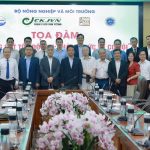
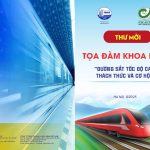
On the morning of May 20, Hanoi University of Civil Engineering hosted the seminar titled “High-Speed Railways: Opportunities and Challenges.” The event was jointly organized by the Urban and High-Speed Railway Innovation Hub (UHRI Hub), a Chodai & Kiso-Jiban Vietnam Co., Ltd. division, and the university’s Faculty of Bridge and Road Engineering.
The Need for Standardization and Regulatory Alignment
Mr. Ho Thai Hung, General Director of Chodai & Kiso-Jiban Vietnam Co., Ltd., expressed his hope that the seminar would help enhance opportunities for dialogue and cooperation between universities, businesses, and other stakeholders, especially in the context of Vietnam actively pursuing investment in the North–South high-speed railway project.
At the event, Associate Professor Dr. Tong Tran Tung, a member of the Minister of Construction’s Advisory Group, emphasized the urgent need for unified state management of technical regulations in railway investment and construction.
According to Dr. Tung, the current system of national standards and technical regulations for railways and urban railways in Vietnam remains inadequate to meet the demands of developing a modern railway system, as outlined in the Politburo’s strategic directives.
He highlighted the lack of consistency and synchronization in infrastructure and technology across urban railway lines. Despite operating within the same urban railway network, many lines adopt incompatible technologies, resulting in fragmentation in infrastructure, specialized equipment, and rolling stock. This technological disparity further complicates investment planning, operations, maintenance, and training, reducing the railway system’s efficiency and sustainability.

Associate Professor Dr. Tong Tran Tung – Member of the Minister of Construction’s Advisory Group at the seminar
Dr. Tung emphasized that a country is not obligated to adopt international standards if deemed ineffective or incompatible with national goals. However, he stressed the urgent need to establish a consistent system of technical regulations and national standards that ensure connectivity and synchronization across infrastructure and technology to develop a modern railway system.
Without such uniformity, engineers and specialists trained under one set of standards would be forced to relearn procedures when working on another line governed by different standards, resulting in inefficiencies and significant delays.
He further noted that inconsistent technologies and equipment create challenges during the construction phase and lead to complications in system operation, maintenance, and even in safety assessment and approval processes, such as fire protection certification.
Significantly, Dr. Tung proposed that the immediate priority for Vietnam’s high-speed railway system should be translating and thoroughly reviewing relevant standards from Europe, Japan, and China. This process, he argued, is essential for evaluating and selecting a suitable standard framework upon which to base Vietnam’s national standards for high-speed rail.
He also highlighted the importance of choosing standards that support infrastructure design that accommodates mixed-traffic operations, specifically, passenger trains traveling up to 250 km/h and heavy freight trains at 120 km/h. Ensuring this dual capability is critical to Vietnam’s long-term vision for its high-speed rail network.
Ensuring Sustainable Localization
At the seminar, Japanese experts shared practical insights on high-speed rail development, drawing from international experience to highlight key considerations for Vietnam’s own plans.
Mr. Keiichi Aoki, Chief Engineer at Chodai Japan, presented knowledge on high-speed rail systems and discussed Taiwan’s approach as a cautionary example. Taiwan initially selected components from different international systems but lacked a balanced integration strategy, leading to costly adjustments and inefficiencies. Specifically, Taiwan began its high-speed rail project using European standards but later adopted Japanese standards due to incompatibility with local conditions, resulting in significant additional expenses.

Experts discuss at the seminar
Mr. Masataka Yamamoto, General Director of IHI Infrastructure Asia, shared lessons from India’s high-speed rail project, emphasizing the importance of adhering to international standards and strict quality control, particularly in manufacturing steel structures for railway bridges. He recommended that Vietnam develop a standards and inspection framework aligned with global norms and encourage joint venture models for effective technology transfer. Such approaches, he noted, are crucial for achieving long-term and sustainable localization.
Mr. Toshio Takebayashi, President of Nippon Sokei Co., Ltd., introduced the Press-in Method—an advanced, noise-free, low-vibration piling technology well-suited to Vietnam’s complex and sensitive geotechnical conditions. He announced that Nippon Sokei plans to conduct a live demonstration of its latest piling machines, the Silent Piler and Gyro Piler, in Bac Kan province in June 2025. These machines are expected to be applied in high-speed rail construction and infrastructure for disaster mitigation.
To ensure Vietnam can keep pace with the rapid global development of high-speed rail, Japanese experts advised that the Vietnamese government must establish a clear and consistent policy on technology and standards selection. With numerous high-speed rail technologies available globally, selecting a single, coherent system is vital. A hybrid approach—adopting different elements from multiple countries—would likely lead to incompatibilities and operational difficulties. Once the preferred country’s technology is chosen, that country can provide valuable technical support and share operational experience.
Furthermore, experts recommended that Vietnam’s high-speed railway standards incorporate disaster-resilience measures, including protections against heavy rainfall, strong winds, and weak soil conditions.
Notably, Japan’s experience in high-speed rail development shows that advancing such projects requires the establishment of dedicated research institutes and consultancy firms. This underscores the importance of training and developing a skilled workforce.
Source:https://tapchixaydung.vn/can-xay-dung-mot-he-thong-tieu-chuan-quoc-gia-nhat-quan-cho-duong-sat-20201224000030482.html