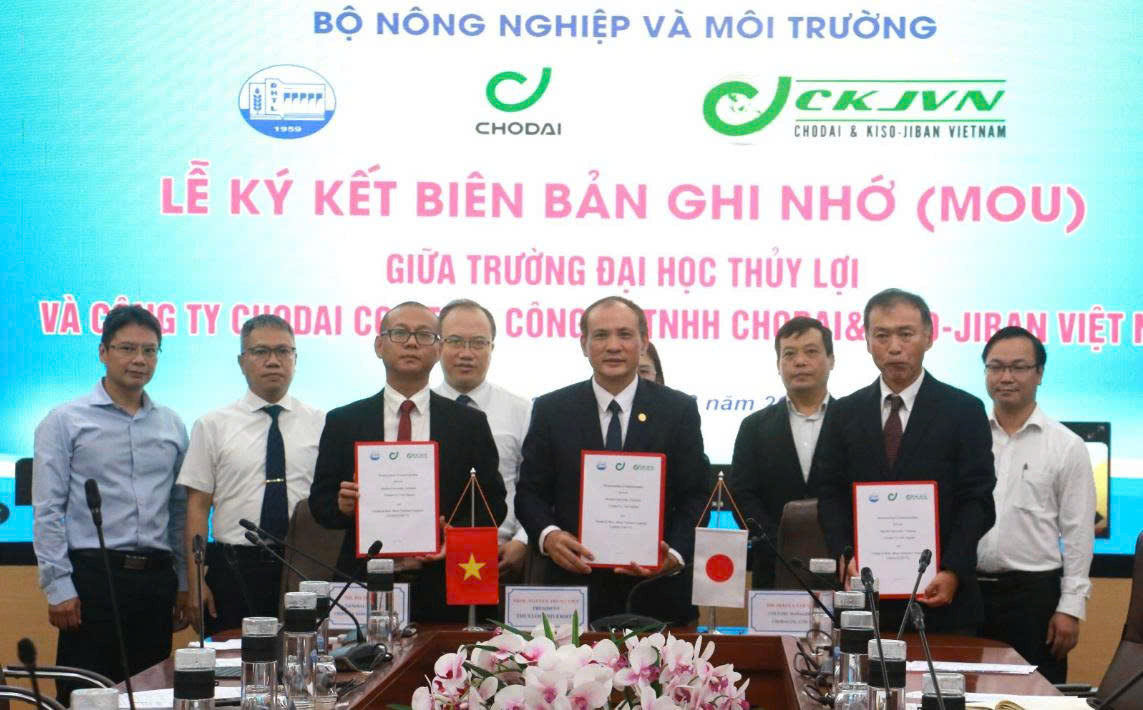





On August 20, Thuyloi University, Chodai Co., Ltd. (Japan), and Chodai & Kiso-Jiban Vietnam Co., Ltd. held a signing ceremony for a Memorandum of Understanding (MOU) and co-organized the 2nd Scientific Seminar themed
“High-Speed Rail: Challenges and Opportunities.”
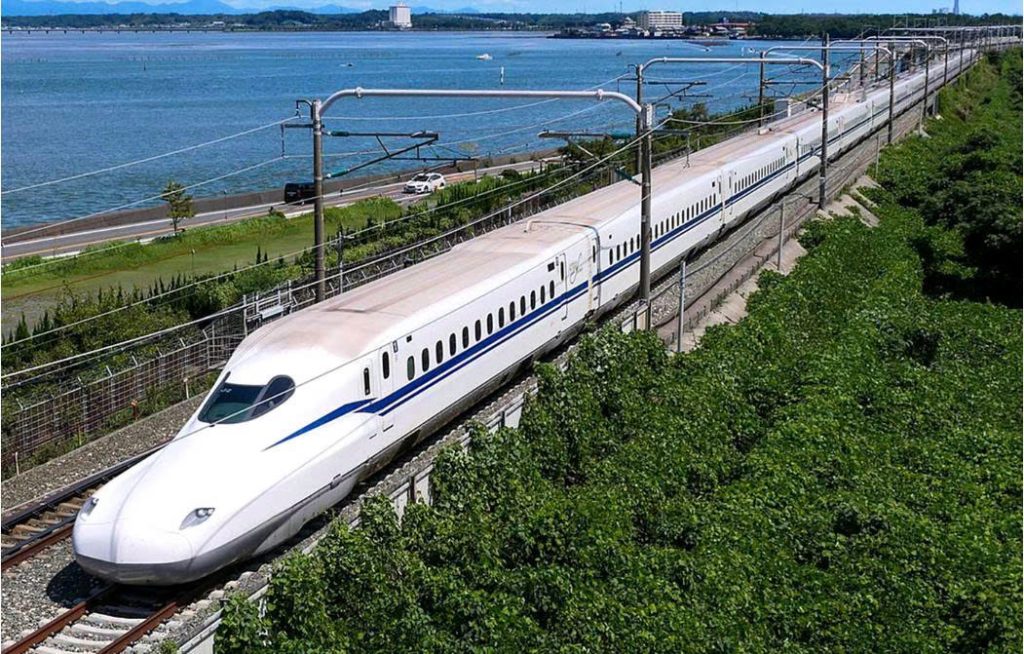
The Shinkansen – the symbol of Japan’s high-speed railway system (Source: japantimes.co.jp)
The event brought together international experts, policymakers, researchers, and enterprises in the field of railway infrastructure.
Speaking at the seminar, Prof. Dr. Nguyen Trung Viet, Rector of Thuyloi University, emphasized that over its 65-year history, the university has grown into Vietnam’s leading institution in water resources, hydropower, environmental management, and disaster prevention and mitigation. He noted that the university’s development strategy is to become one of the country’s top ten multidisciplinary universities.
The signing of cooperation agreements with international partners, along with the organization of in-depth seminars—particularly on pressing issues such as the development of high-speed rail (HSR)—is of great significance for the university’s growth.
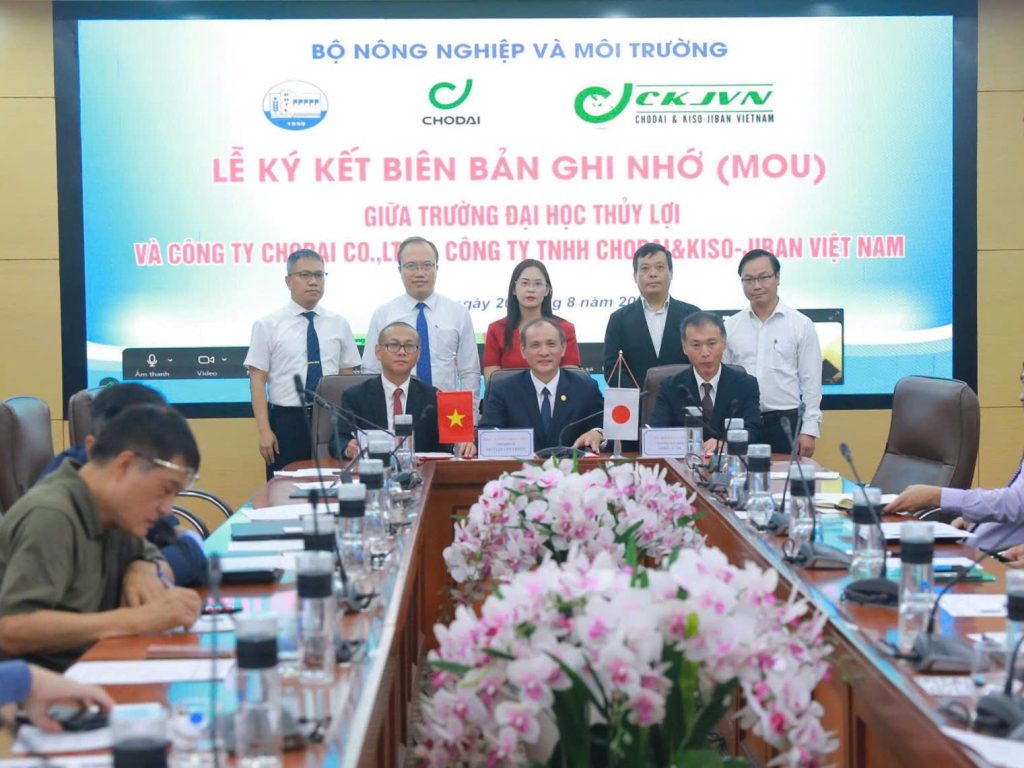
Prof. Dr. Nguyen Trung Viet, Rector of Thuyloi University; Mr. Sekiya Takao, Chief Engineer in charge of Vietnam at Chodai Co., Ltd. (Japan); and Mr. Ho Thai Hung, General Director of Chodai & Kiso-Jiban Vietnam Co., Ltd., signed the Memorandum of Understanding (MOU).
On this occasion, Chodai & Kiso-Jiban Vietnam Co., Ltd. also awarded scholarships to the Scholarship Fund and the Student Scientific Research Program of the Faculty of Civil Engineering.
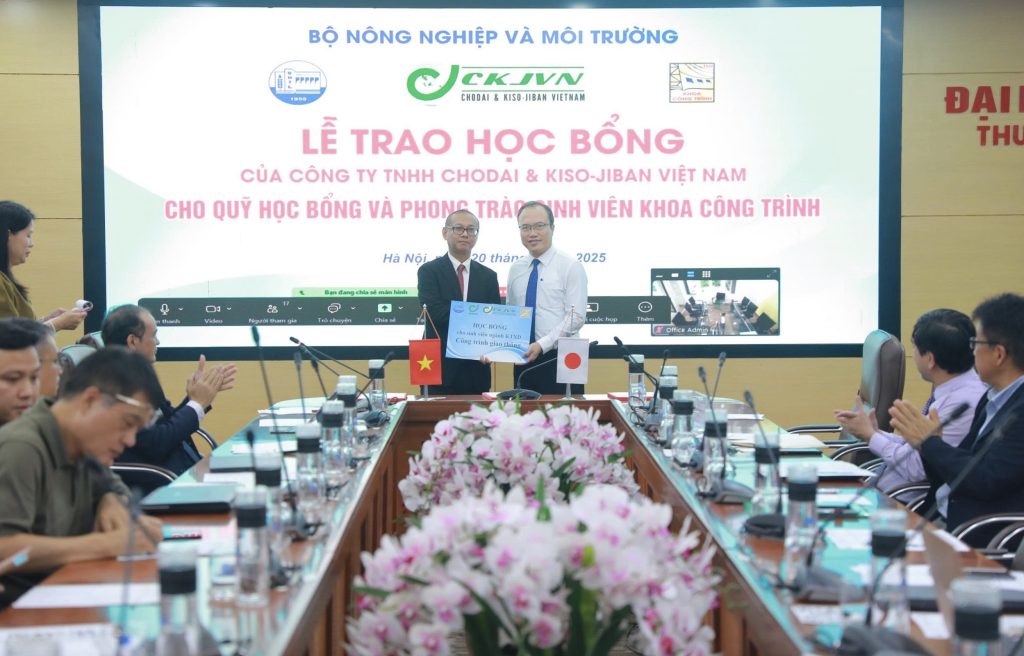
Mr. Ho Thai Hung, General Director of Chodai & Kiso-Jiban Vietnam Co., Ltd., awarded scholarships to the Scholarship Fund and the Student Scientific Research Program of the Faculty of Civil Engineering.
Japan is recognized for its advanced technology and long-standing expertise in high-speed rail (HSR) development. Chodai Co., Ltd. (Japan) and Chodai & Kiso-Jiban Vietnam Co., Ltd. will share their insights, providing valuable knowledge on HSR technology for Vietnam.
Prof. Dr. Nguyen Trung Viet also expressed his hope that, following the signing of the tripartite cooperation agreement, the three parties will strengthen collaboration and create more opportunities for training high-quality human resources to support the development of HSR in Vietnam.
The seminar focused on key topics related to planning, design, technology, and materials for high-speed rail (HSR) infrastructure, featuring notable presentations on:
Technical Presentations & Innovations
- HSR Infrastructure Planning – by Mr. Keiichi Aoki, highlighting lessons from Japan, Europe, and China, with a focus on solutions tailored to Vietnam.
- Bridge Design & Construction – Dr. Dang Viet Duc (Thuyloi University) proposed using prestressed concrete box girders for about 50–60% of the route’s viaducts, optimizing cost-efficiency and structural performance.
- Steel Sub-Structure Solutions – Mr. Ohki Hitoshi (Nippon Steel Vietnam) introduced rotational steel piles and composite pile systems applied in the Shinkansen network.
- Green Construction Materials – Dr. Trinh Hoang Son (University of Transport Technology) presented Geopolymer Concrete (GPC), reducing CO₂ emissions by up to 90% while extending infrastructure lifespan.
- International Project Insights – Mr. Toshio Takebayashi (Nippon Sokei, Japan) shared best practices from India’s Mumbai–Ahmedabad HSR corridor.
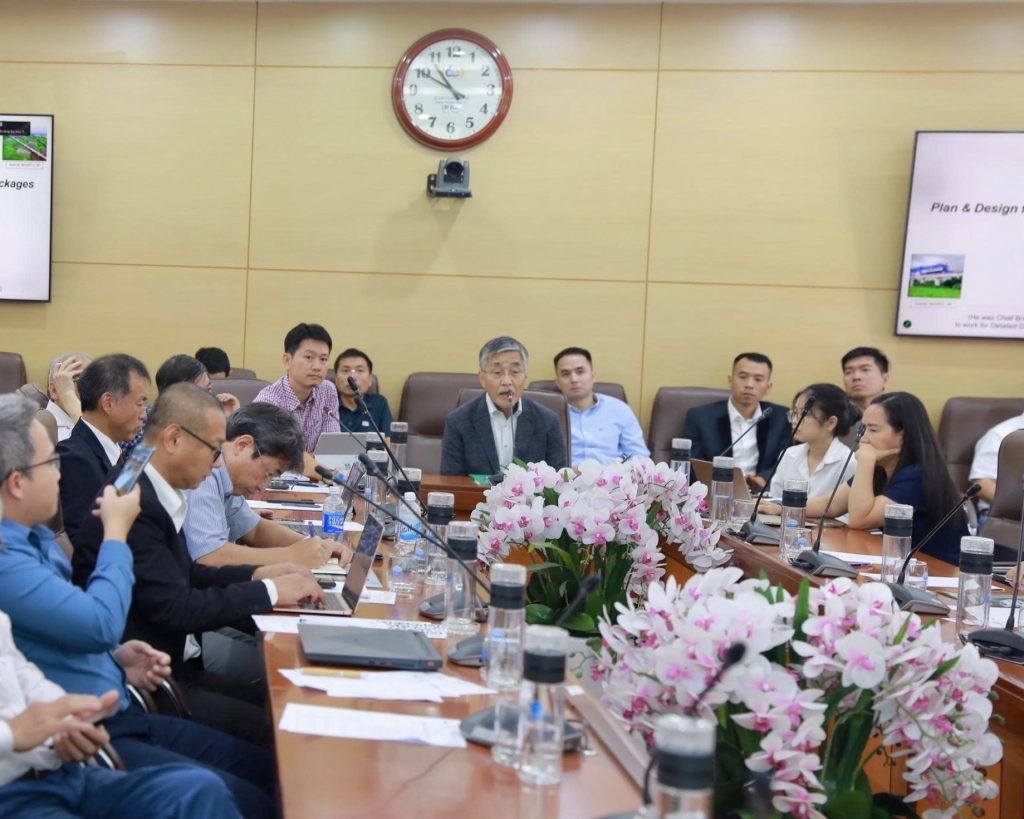
Mr. Toshio Takebayashi, Chairman of Nippon Sokei Co., Ltd., delivered a presentation titled “Planning and Design of High-Speed Rail Overpasses – Selected International Case Studies.”
Roundtable Discussion
The concluding roundtable discussion provided a direct forum for dialogue between speakers and participants, both in person and online. It not only offered an opportunity to exchange knowledge and advanced technologies but also reaffirmed the vital role of linking academia, industry, and international experts in shaping the future development of Vietnam’s high-speed rail system.
Japan’s Experience in High-Speed Rail Development
Notably, in sharing Japan’s experience with high-speed rail (HSR), Mr. Keiichi Aoki, an expert from Chodai Co., Ltd. (Japan), presented practical insights drawn from more than 40 years of research and involvement in international HSR projects. His presentation focused on three key areas:
- Overall effectiveness – The benefits of HSR extend beyond reducing travel time. The system enhances transport capacity, alleviates pressure on road and air networks, and delivers long-term socio-economic value.
- Implementation strategy – The effectiveness of HSR depends heavily on timing and deployment strategy. In addition to initial construction costs, operating, maintenance, repair, environmental management, and equipment expenses must all be systematically controlled to ensure sustainability.
- Revenue generation – To maximize returns from an HSR system, three factors are critical: (i) reducing travel time, (ii) improving passenger convenience through seamless connectivity, punctuality, and safety, (ii) integrating infrastructure development with value-added services.
When comparing international standards, Mr. Aoki emphasized the fundamental differences among the Japanese, European, and Chinese systems. Japan’s Shinkansen was developed exclusively for passenger transport, with no freight operations, lightweight rolling stock, dedicated tracks, centralized signaling, nighttime maintenance, and minimal speed reductions within residential areas. These operating principles have enabled the Shinkansen to maintain its record of safety, precision, and efficiency for more than 50 years.
In terms of design, Japan prioritizes elevated viaducts with rigid-frame structures and prefabricated components, ensuring high construction precision and facilitating rapid recovery in the event of natural disasters. Notably, Japan enforces stricter standards than Europe in areas such as noise, vibration, and operational safety under seismic conditions.
Mr. Aoki recommended that Vietnam establish its own “operational philosophy” tailored to national conditions—focusing not on maximum speed, but on reducing journey times while ensuring stability, safety, and sustainable development. He further noted that Japan’s experience underscores the importance of integrated management, aligning infrastructure, rolling stock, and operational organization to build an effective high-speed rail system.
Bridge Design for High-Speed Rail
In his presentation on bridge design for high-speed rail (HSR), Dr. Dang Viet Duc from the Faculty of Civil Engineering, Thuyloi University, emphasized that the selection of materials and structural solutions plays a decisive role.
In Vietnam, high-quality steel remains expensive and difficult to produce, with high maintenance costs, making steel bridges unsuitable for high-speed rail (HSR). Instead, a more feasible solution is to prioritize elevated viaducts for approximately 50–60% of the route, with spans of about 50 meters, using prestressed concrete box girders, which provide strong resistance to torsion and bending.
Vietnam holds an advantage in abundant construction materials such as high-quality cement, stone, and sand. Coupled with the growing capacity of domestic steel manufacturers, the country is well-positioned to meet construction demands, particularly when combined with lessons learned from international experience.
In terms of technology, segmental erection methods—successfully applied in the Tan Vu–Lach Huyen viaduct project in Hai Phong—help shorten construction schedules and reduce costs, making them particularly suitable for projects requiring rapid implementation.
Compared with highway bridges, high-speed rail (HSR) bridges are subject to more stringent technical requirements regarding vibration frequency and stiffness. Notably, Chinese standards regulate lateral stiffness in terms of spring constants, while European standards place greater emphasis on limiting displacement at fixed points.
From this analysis, Dr. Dang Viet Duc concluded that the most suitable solution for Vietnam is to adopt prestressed concrete box-girder bridge structures, constructed either in situ or using the balanced cantilever method with movable scaffolding. This approach would ensure compliance with international standards on safety, stiffness, and the stable operation of the high-speed rail system.
The development of high-speed rail (HSR) in Vietnam requires appropriate technical and management solutions, with a strong emphasis on safety and long-term efficiency. International experience provides a valuable foundation for reference, to be selectively applied in line with Vietnam’s specific conditions.
Soucer:https://tapchixaydung.vn/ket-noi-tri-thuc-trong-phat-trien-duong-sat-toc-do-cao–20201224000032649.html