




On the morning of March 29, 2025, at Bach Dang Wharf Park (District 1), Ho Chi Minh City officially broke ground on the Saigon River Pedestrian Bridge — a symbolic infrastructure project marking a major leap in the city’s journey toward a modern, sustainable, and culturally rich urban landscape. Notably, the groundbreaking ceremony took place a full month ahead of schedule, reflecting the city’s determination and swift action in creating high-quality public spaces for its residents.
The groundbreaking ceremony welcomed leaders from the Party, the State, the Ho Chi Minh City People’s Committee, local departments, and authorities. Leaders from Nutifood Group — the project’s principal sponsor — attended alongside strategic partners and key stakeholders, united by a shared vision of building a more livable and dynamic city.

Leaders of the Party, the State, and affiliated units officiated the groundbreaking ceremony of the project. (Photo: Nutifood Company)
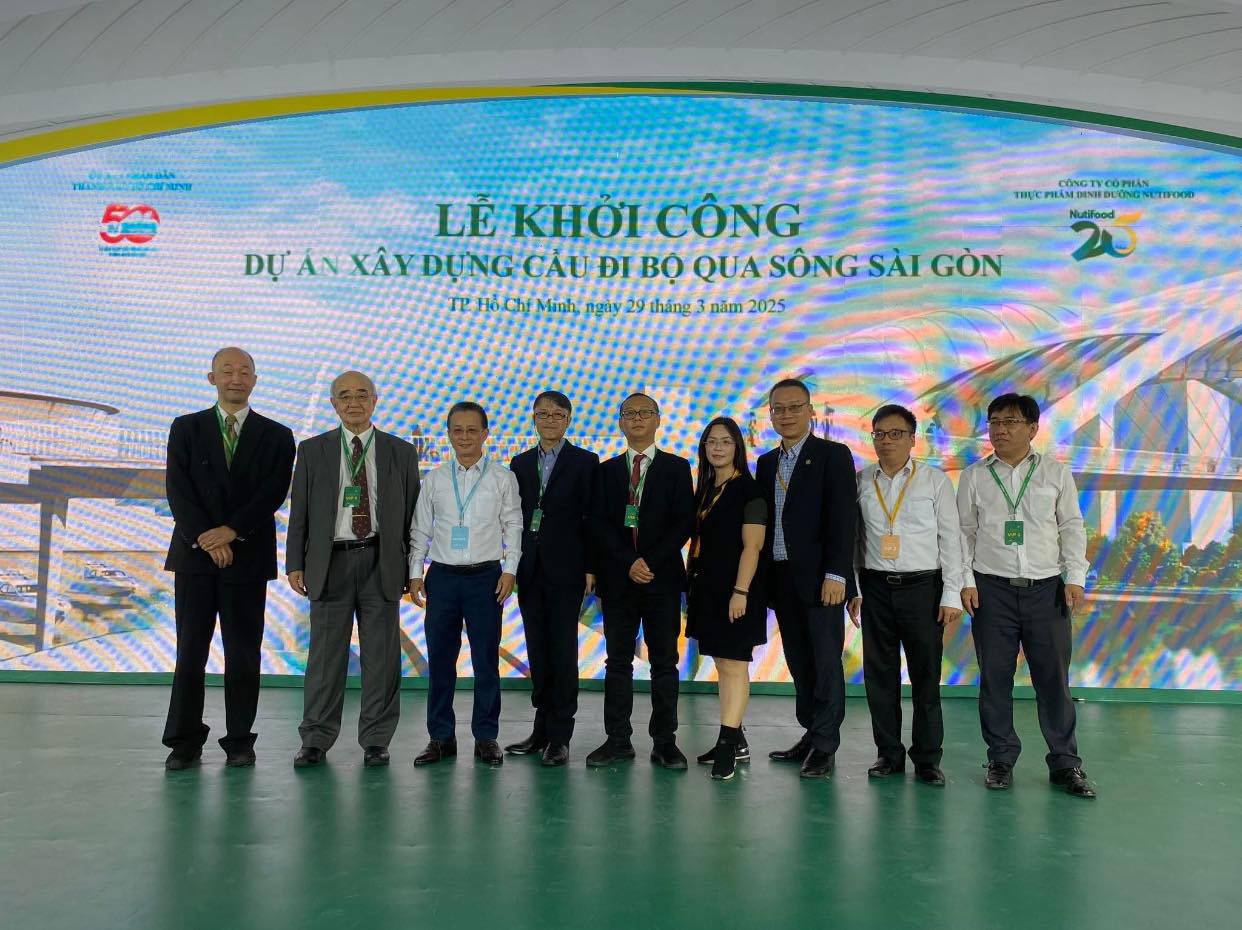
In the vibrant atmosphere of the ceremony, the project’s principal design consortium was honored to attend, represented by leaders and experts, including Mr. Yasuji Nagaya (Chairman of Chodai Corporation, Japan), Mr. Ho Thai Hung (General Director of Chodai & Kiso-Jiban Vietnam Co., Ltd.), Mr. Takashi Niwa (General Director of Takashi Niwa Architects), Mr. Hiroshi Kudo (Project Director – Chodai Corporation, Japan), and Ms. Nguyen Quynh Trang (Deputy General Director of Chodai & Kiso-Jiban Vietnam Co., Ltd.), accompanied by experienced engineers and architects.
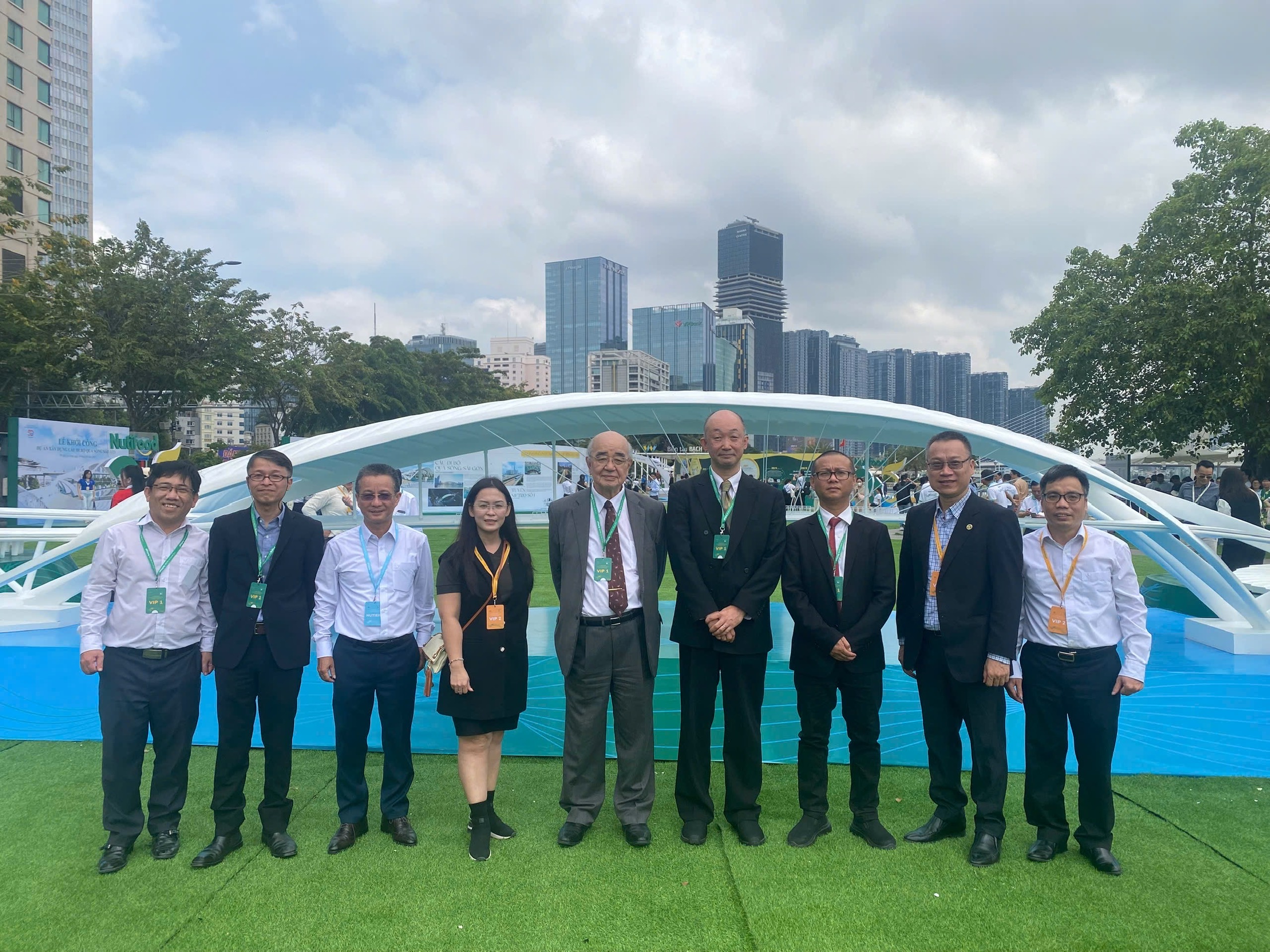
The leadership of the design consultancy joint venture posed for a commemorative photo with Mr. Nguyen Huu Hoang – Senior Director of Nutifood
The Saigon River Pedestrian Bridge – Introducing the first spatial steel arch bridge in Vietnam
With a total investment of nearly VND 1,000 billion, fully sponsored by Nutifood Nutrition Food Joint Stock Company, the Saigon River Pedestrian Bridge will connect Bach Dang Wharf Park (District 1) with the riverside park in the Thu Thiem New Urban Area (Thu Duc City). The bridge’s starting point is located about 125 meters south of Me Linh Square. The entire bridge spans approximately 610 meters, featuring a main span of 187 meters designed as a cable-stayed spatial steel arch — a modern structure with steel girders and a flexible deck width ranging from 6 to 11 meters.
The main bridge is designed with a navigation clearance of 80 meters in width and 10 meters in height, ensuring smooth and safe waterway traffic. It is the first project in Vietnam to apply a spatial steel arch structure — an advanced engineering solution requiring exceptional precision in both design and construction.
The entire design process was undertaken by a consortium comprising Chodai & Kiso-Jiban Vietnam Co., Ltd., Chodai Corporation, and Takashi Niwa Architects, together with leading experts from Japan and Vietnam, strictly following the highest international standards. Critical factors such as pedestrian loads, emergency vehicle scenarios, windstorms, earthquakes, and ship collisions were comprehensively analyzed. The bridge model also underwent aerodynamic testing overseas to guarantee both structural safety and aesthetic integration with the Saigon River landscape.
A Bridge Connecting Past, Present, and Future
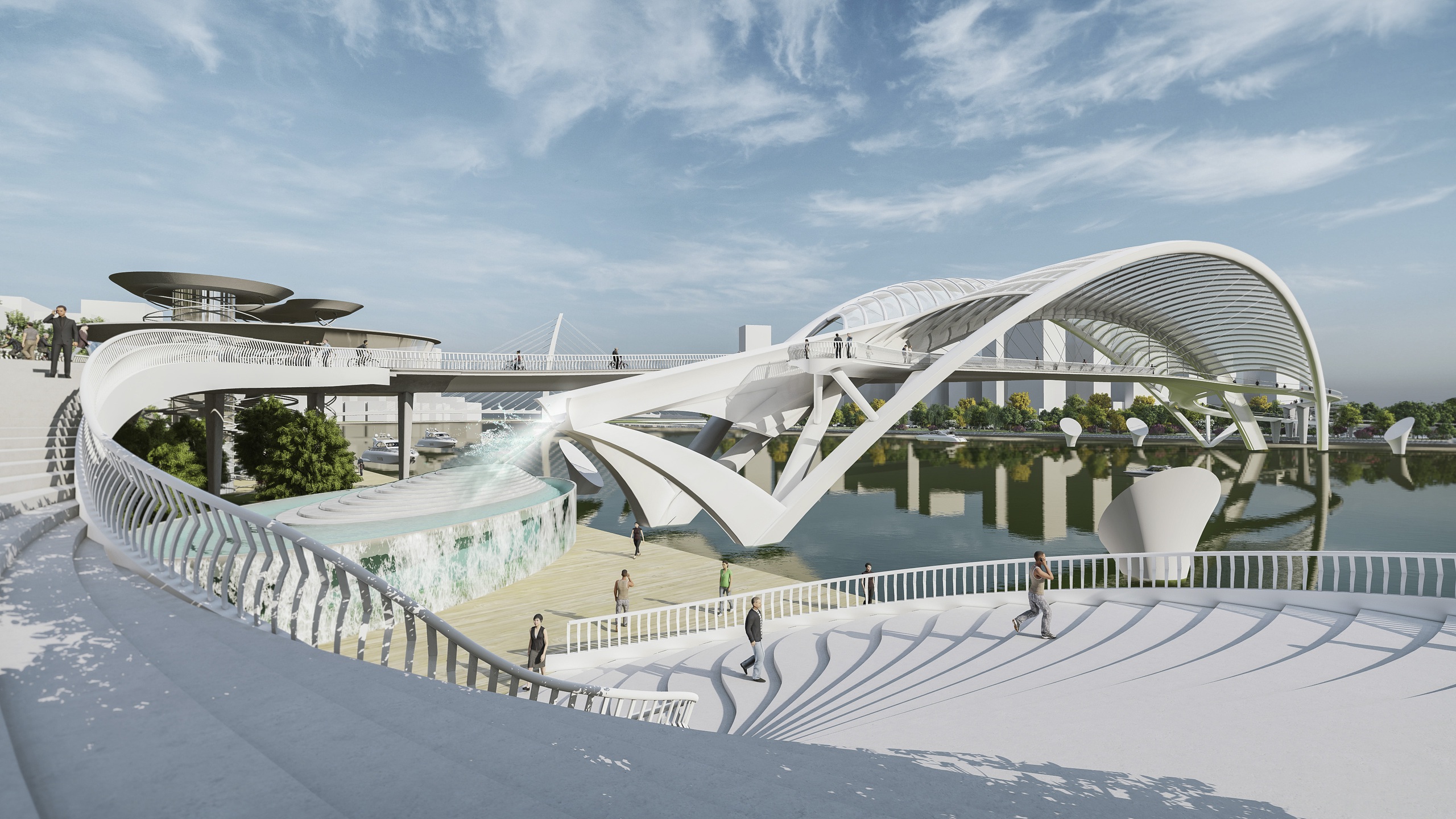
The bridge will be equipped with an ETFE canopy, architectural lighting system, and vertical transport facilities including elevators and escalators. (Photo: Chodai Joint Venture)
More than just a bridge, the Saigon River Pedestrian Bridge is poised to become a new symbol of culture and architecture for Ho Chi Minh City. It promises a vibrant gathering place where residents and visitors alike can stroll along the water’s edge, enjoy outdoor activities, and find a moment of calm amid the city’s lively rhythm.
The bridge carries a deeper meaning of connection, not only linking District 1 and Thu Thiem geographically, but also bridging the city’s historic past, vibrant present, and prosperous future under the proud name of Ho Chi Minh City.
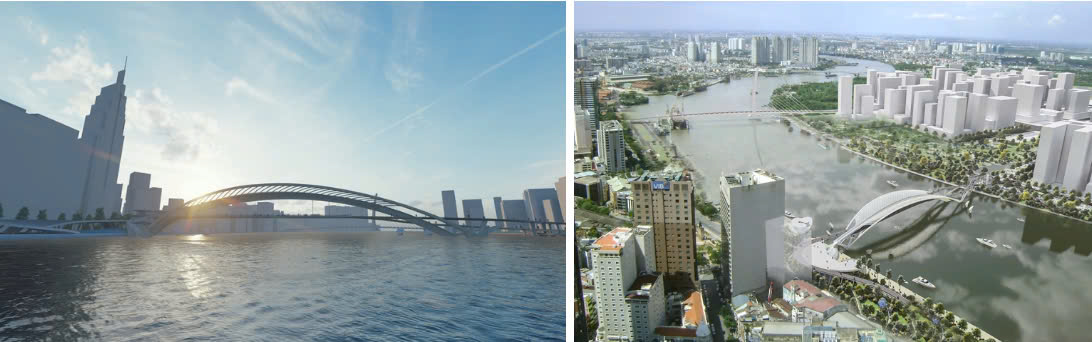
The People’s Committee of Ho Chi Minh City has approved the architectural design of the Saigon River pedestrian bridge, inspired by water coconut leaves – a symbol of Southern Vietnam. (Photo: Chodai Joint Venture)
Much like Ho Chi Minh City — a metropolis defined by its aspirations and relentless drive for advancement — the bridge serves as a testament to the vision of a modern, human-centered urban environment, one that embraces the future while preserving and valuing the present.
The project is slated for official inauguration on April 30, 2026 — a milestone that will mark the addition of a new architectural symbol, further affirming Ho Chi Minh City’s trajectory of development and integration within the global urban landscape.